body
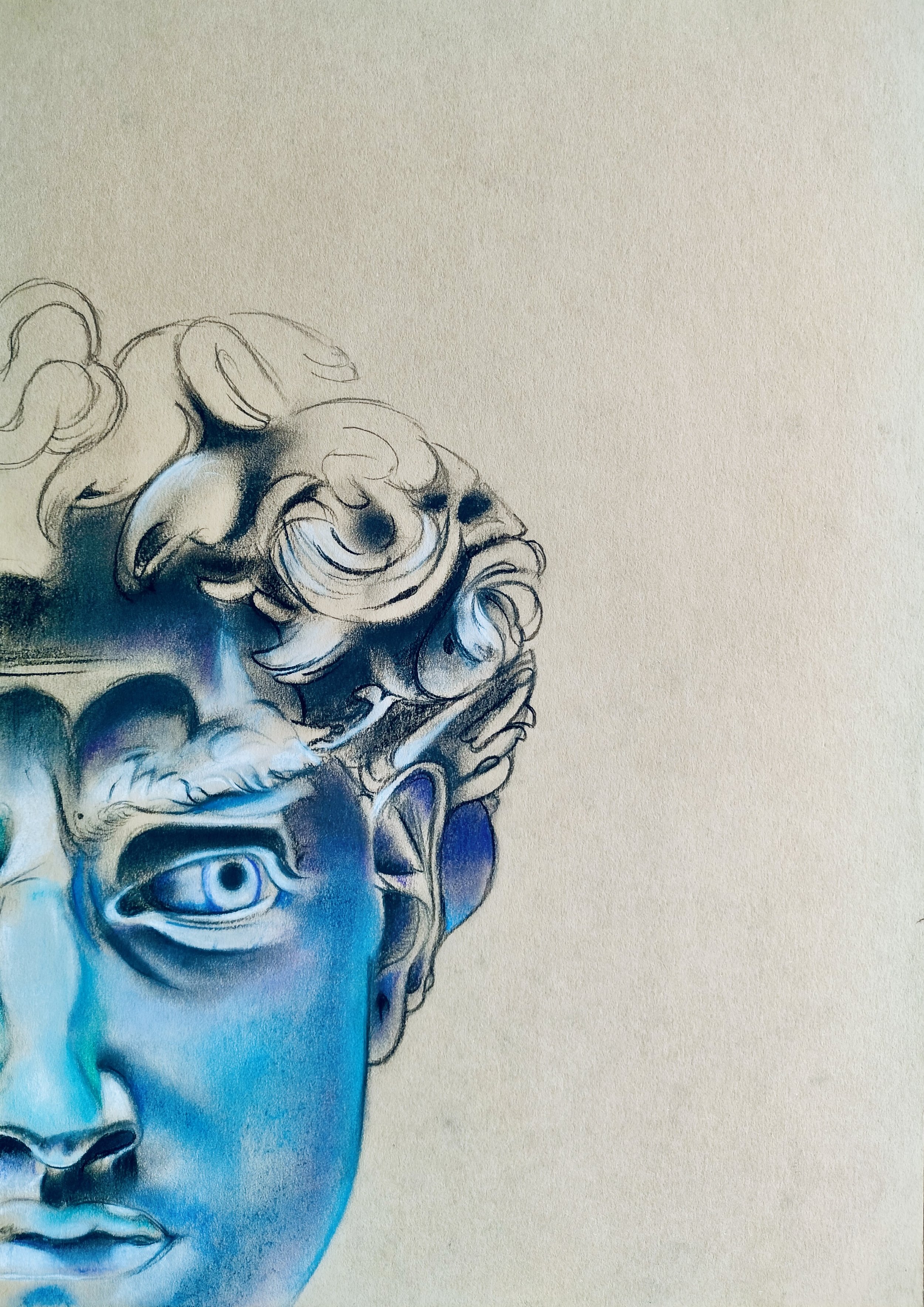
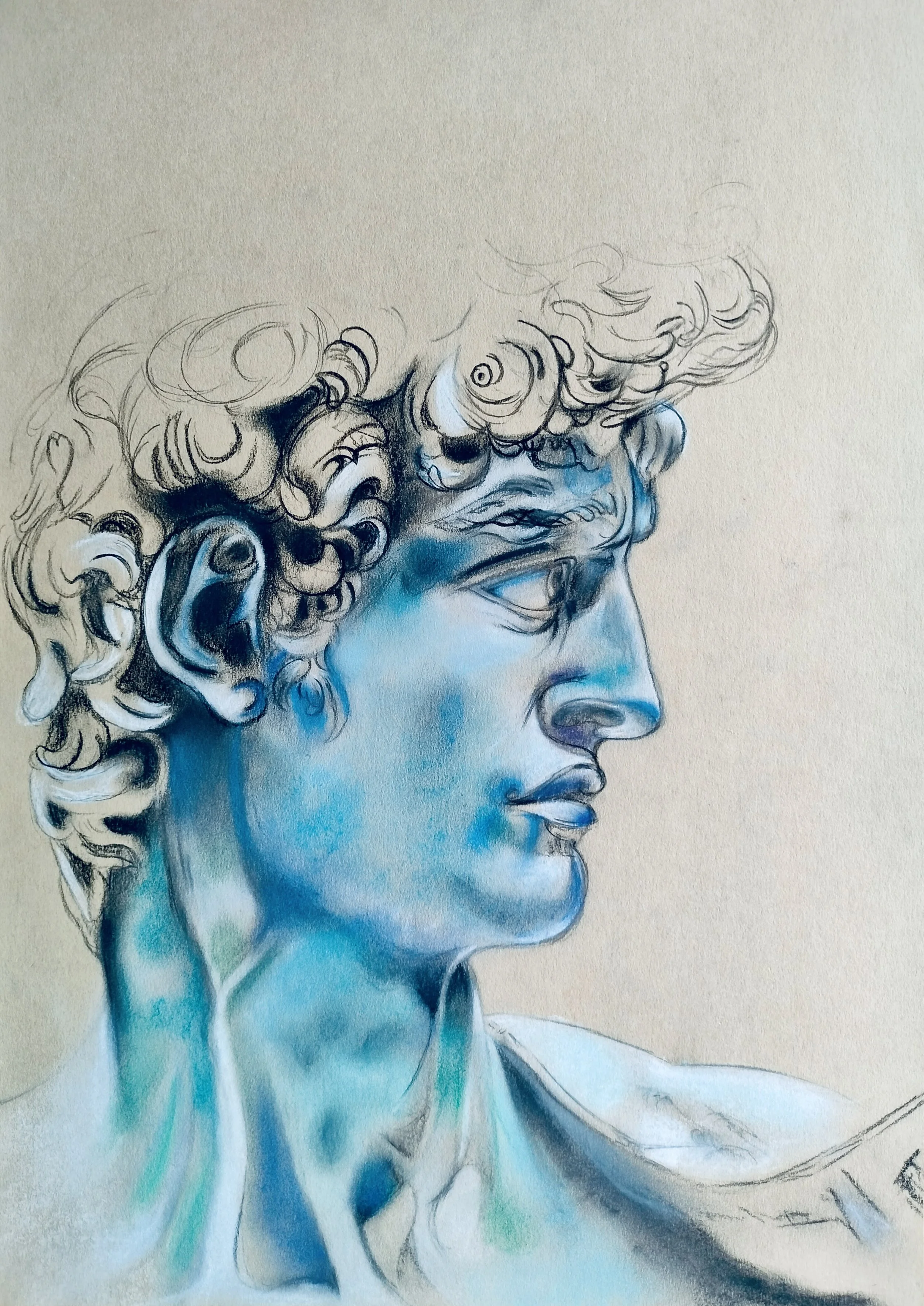
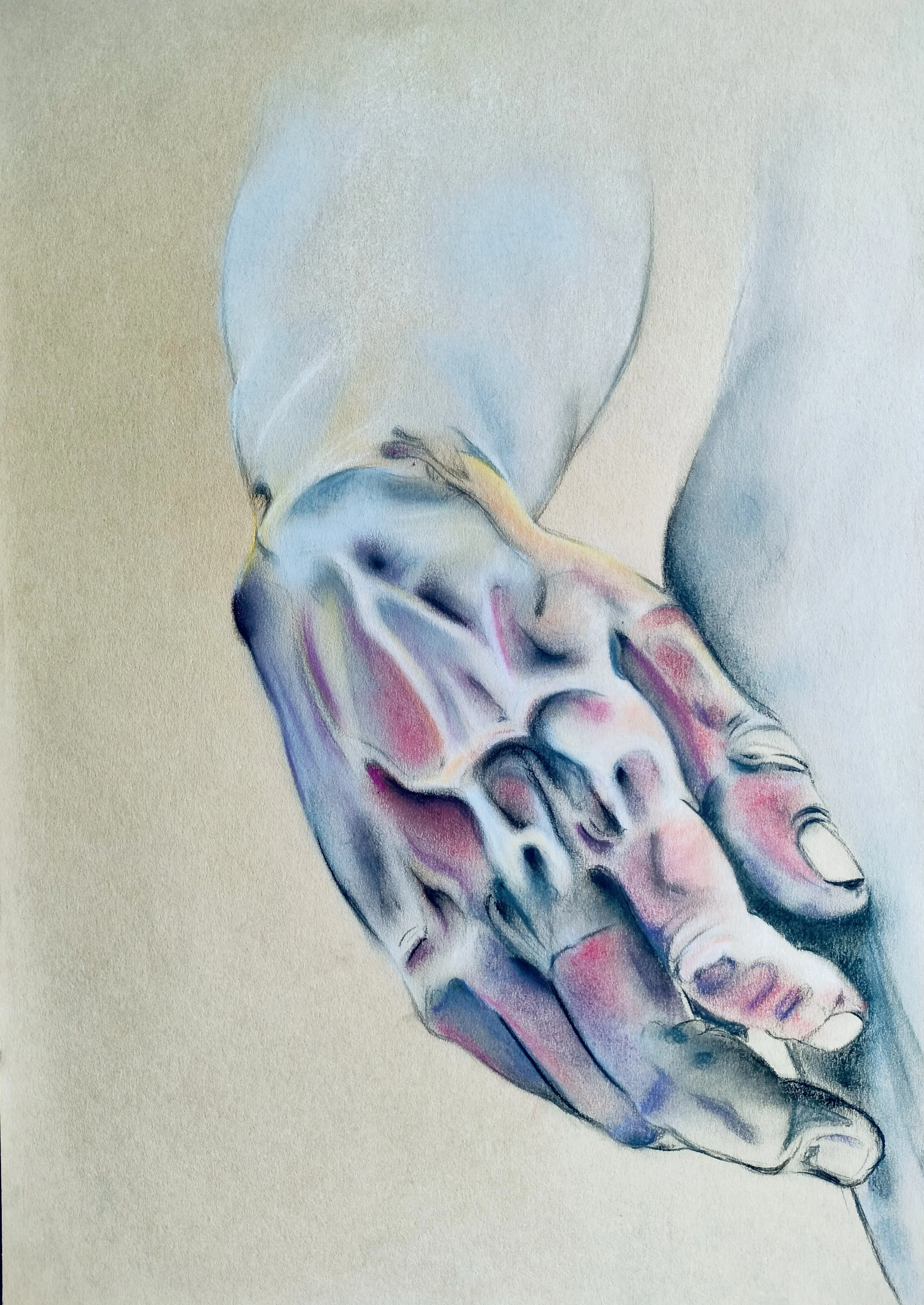
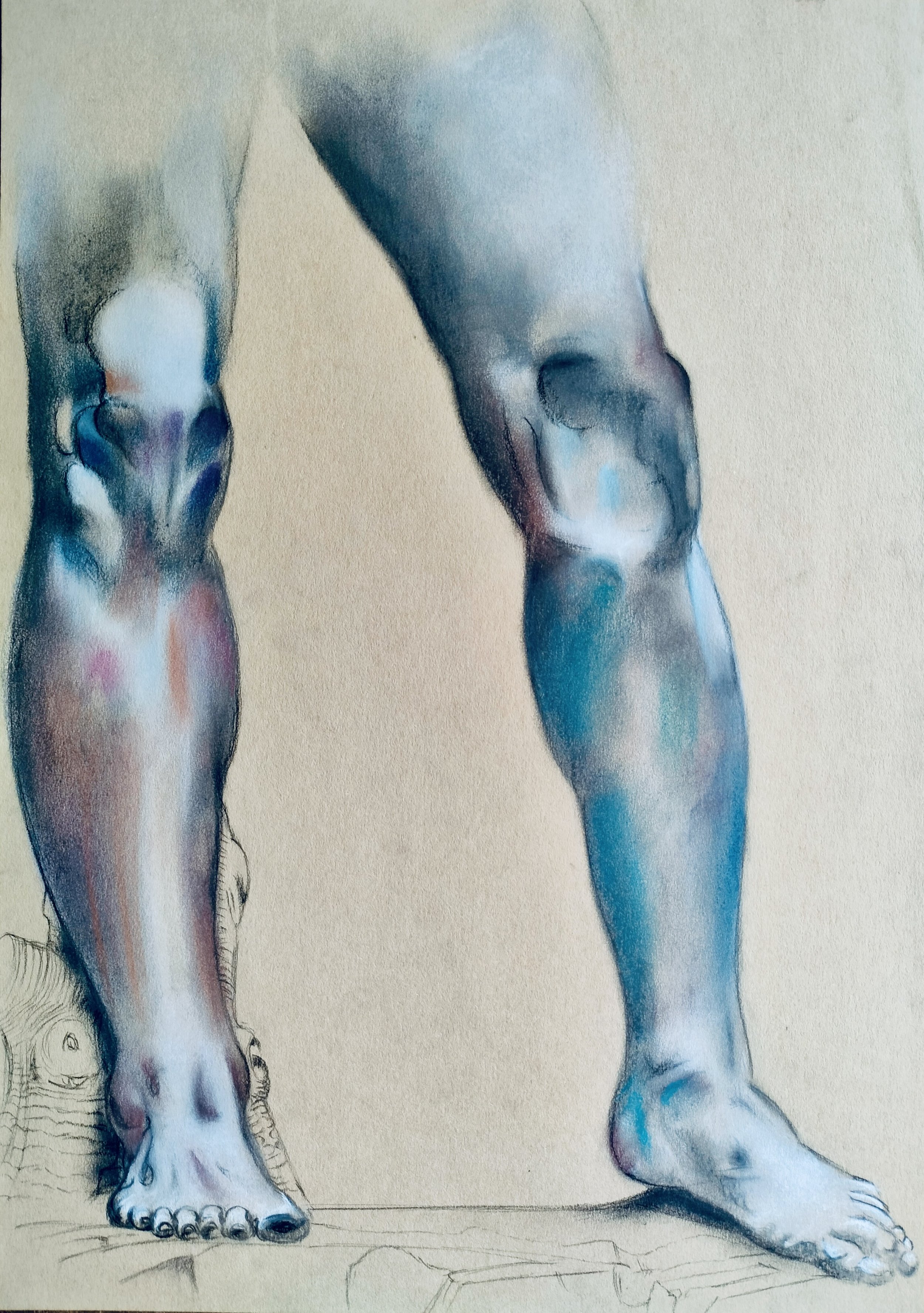
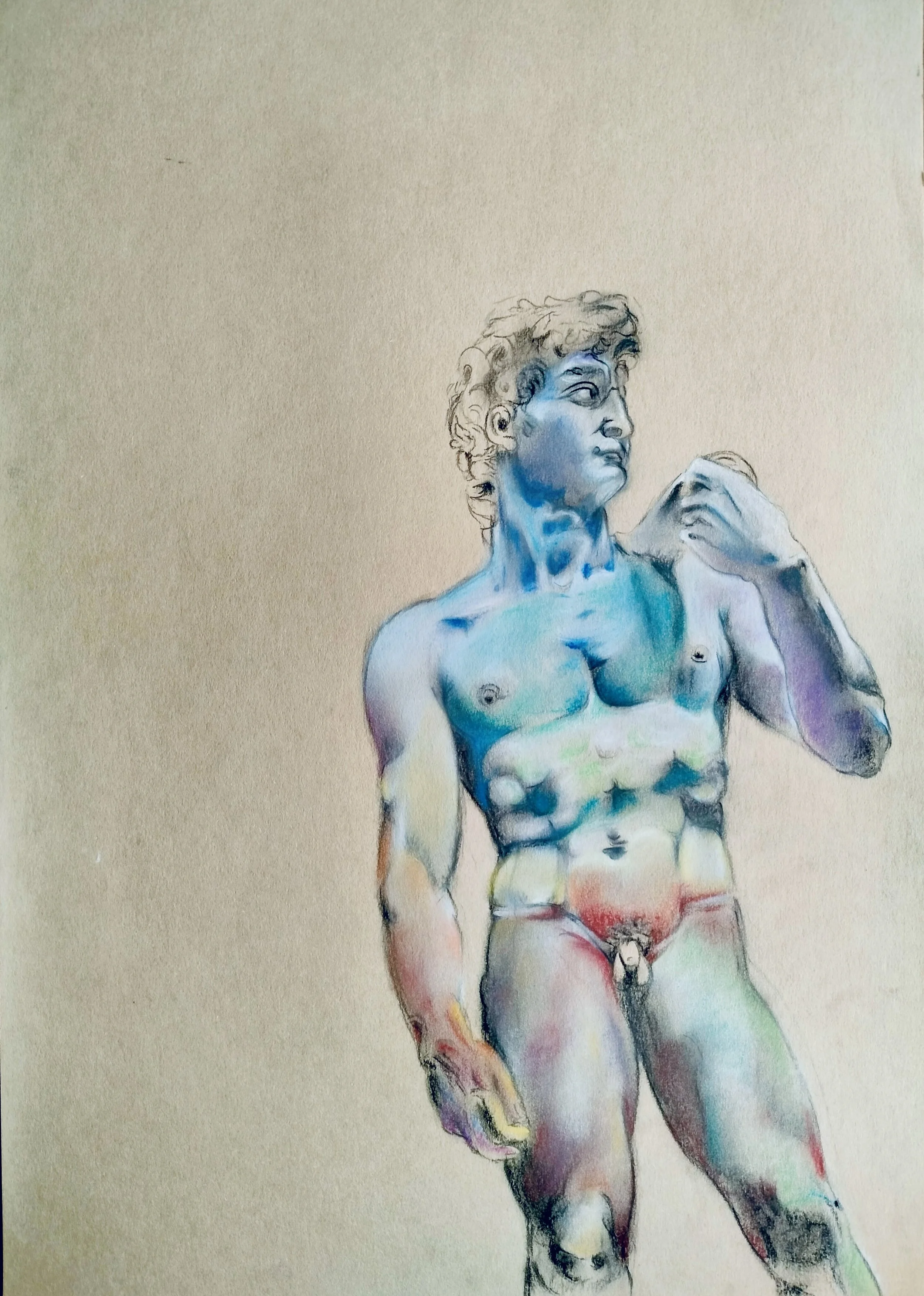
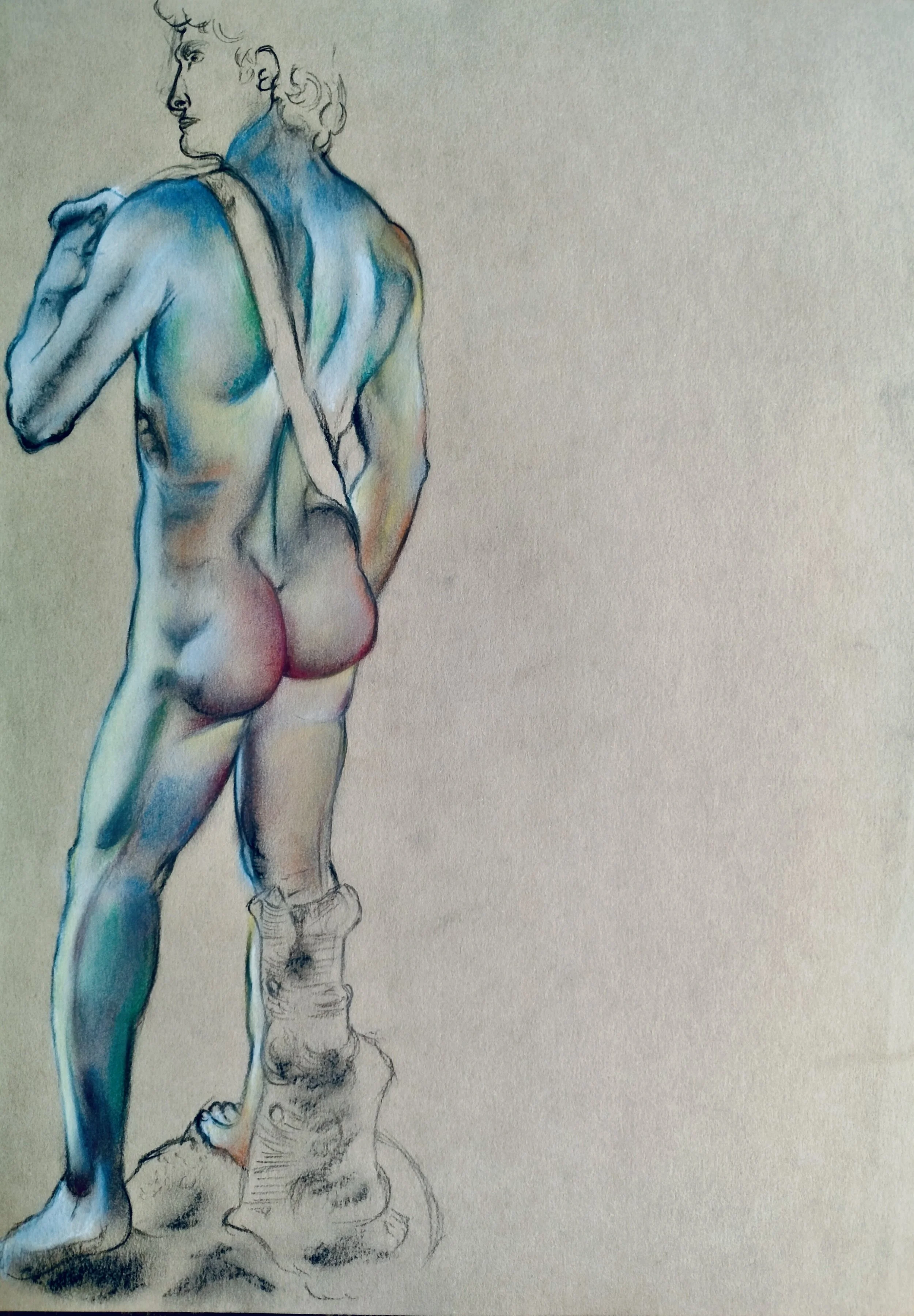
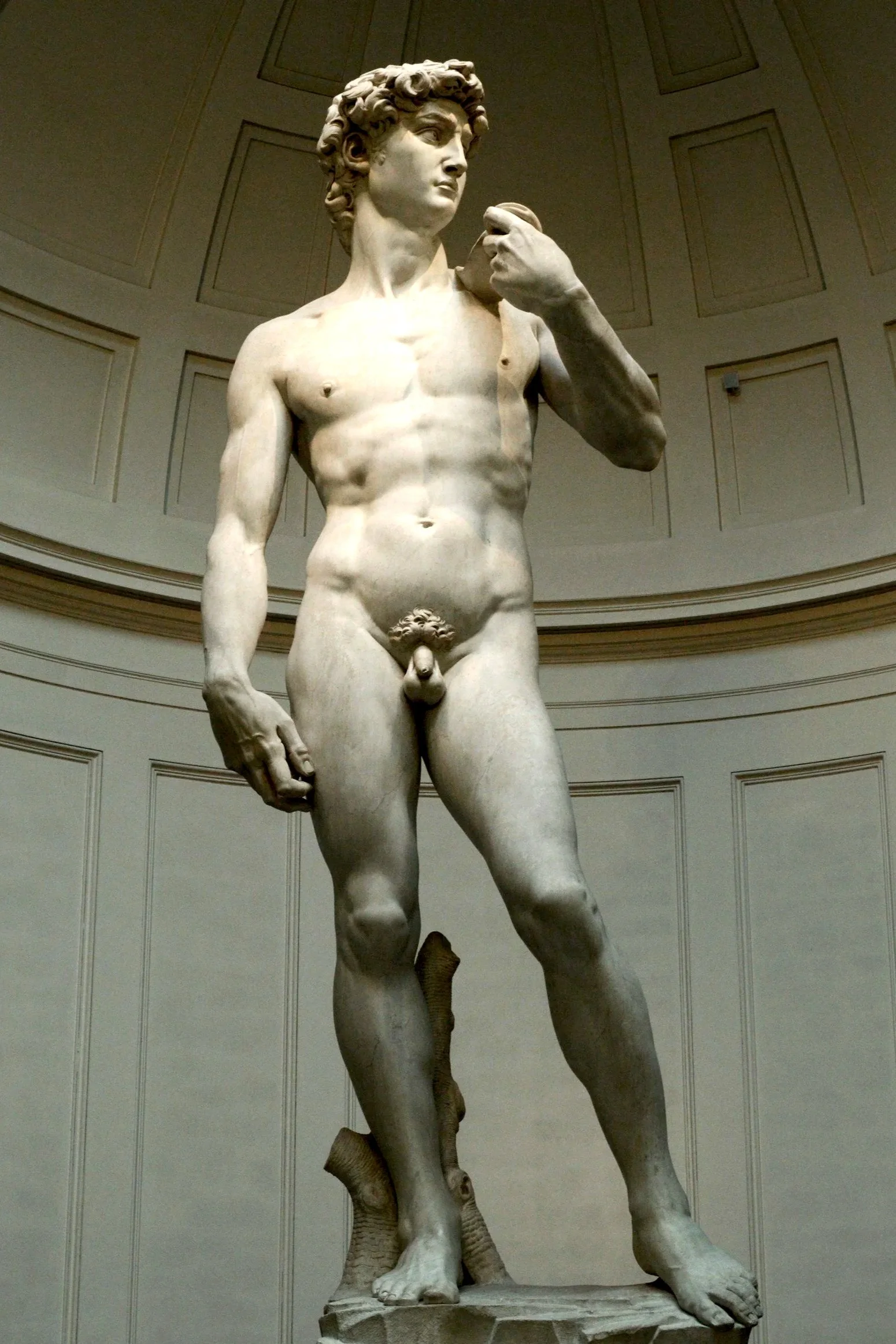
Michelangelo's David, the first colossal marble statue made in the early modern period, is one of the most recognized works of Renaissance sculpture; a symbol of Florentine civic pride and liberty, and a representation of the ideal human form and spirit. The pose fashioned by Michelangelo is unlike that of earlier Renaissance expressions of David. The omission of the giant, Goliath, altogether had never been depicted before. According to scholars, David is depicted before his battle with the giant. Rather than being shown victorious over a foe much larger than he, David looks wary as he sizes up the giant Goliath before the battle has actually taken place. His brow is drawn, his neck tense, and the veins bulge out of his lowered right hand. His left hand holds a sling that is draped over his shoulder and down to his right hand, which holds the handle of the sling. The sculpture has come to embody not just the "glorified warrior" but also the "honorable, worthy, distinguished yet also real, vulnerable and contemplative" individual - a complex portrait of a whole person, which is more enduring than a simple narrative.
This groundbreaking depiction of the biblical hero as a mature, thoughtful man, its technical perfection in stone, and its powerful symbolism as the triumph of good over evil and the power of the individual have made it a cornerstone of Western art history. But that’s not all - a perspective that rarely receives consideration is the power of time and place in the rise of this symbol. Florence, the Italian city-state, and the explosion of great art and brilliant ideas 500 years ago, the likes of which the world has not seen before or since, are two factors that cannot be separated from The David. Together, Michelangelo’s David is not just about the artist and his genius, but the meeting of talent and potential, patronage and mentors, competition and disastrous events and the synthesis of ideas that stand for something profoundly human.